


Pad printing solutions for industrial sectors
TAMPONCOLOR develops pad printing machines and systems for six industrial sectors: medical technology and pharmaceuticals, defence technology, automotive, cosmetics, plastics, and the tool industry. Which solution fits is determined by the component. Material, surface, geometry, print motif, and quantity define the ink, pre-treatment, and machine concept. Development and manufacturing have taken place in Neu-Isenburg since 1977.
Every sector places its own demands on printing, process reliability, and serial production. Whether technical marking, functional print, or decorative print image: what matters is geometry, material, stress, and quantity.
- Founded in 1977
- ISO 9001:2015 certified
- Located in Neu-Isenburg
Industrial pad printing by sector
TAMPONCOLOR delivers printing solutions for a range of industrial markets. The sector classification provides the application context. The specific solution, however, always emerges from the requirements of the individual component and the subsequent production process.
Automotive
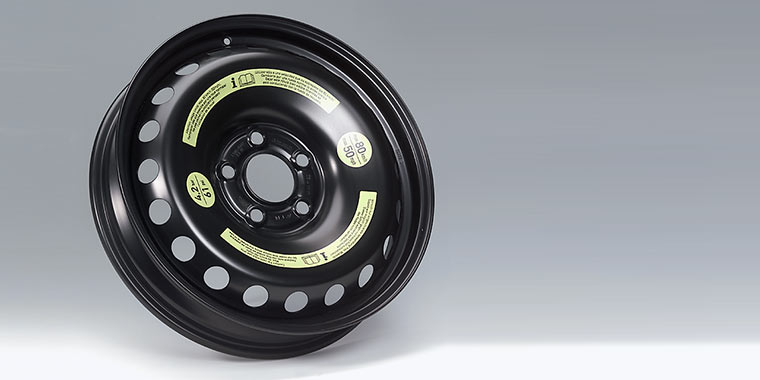
In the automotive industry, pad printing is used for technical markings, functional print images, and decoration on curved component surfaces. Durability requirements arise from the installation location: interior parts are assessed for scratch and cleaning agent resistance, exterior and engine compartment parts additionally for temperature cycling and UV exposure.
TAMPONCOLOR has developed printing systems for label printing on the three-dimensional contours of spare wheels and for decorative printing on aluminium wheels. Printing, component handling, drying, and connection to existing transport systems can be combined into a single system concept.
Cosmetics industry
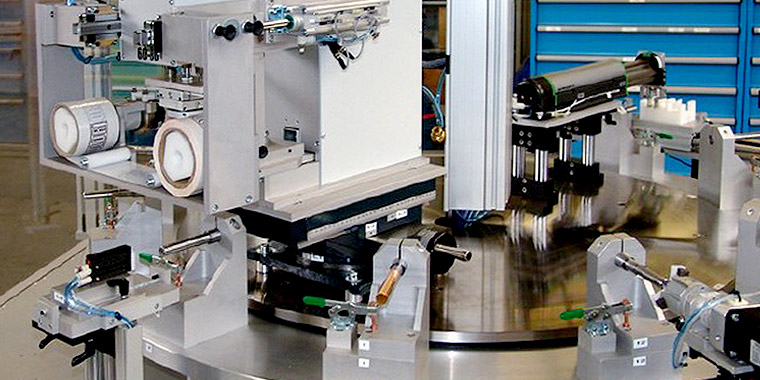
Packaging, metal sleeves, and applicators combine technical and design requirements. On small radii and irregular shapes, the print image must sit without distortion or colour offset, because the pad transfers the ink as it rolls onto curved surfaces. Multi-colour motifs are printed wet-on-wet.
TAMPONCOLOR develops machines and automated printing systems for component shapes with high variant diversity. Printed materials include plastic sleeves, anodised aluminium, and glass. Workpiece fixtures and changeover concepts are designed so that switching between variants is possible without reconfiguring the system.
Plastics industry
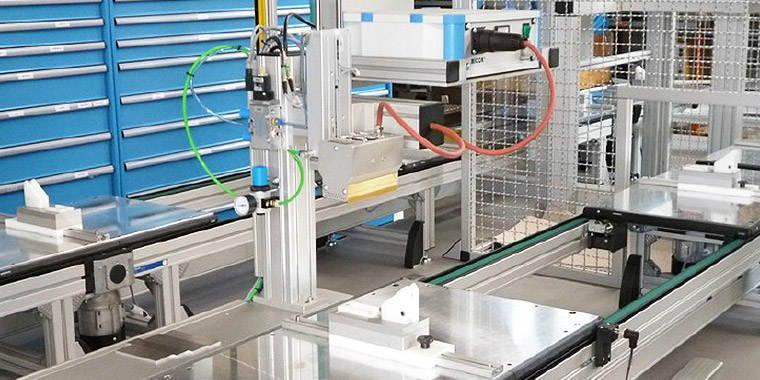
Plastic components vary considerably in material, shape, and surface properties. Printing ink, pre-treatment, workpiece fixture, and process parameters must therefore be considered together.
TAMPONCOLOR delivers printing systems for single- and multi-colour print images on a variety of plastic parts. Depending on the material, surface pre-treatment can be integrated into the production process. Changing component geometries and later expansions can also be taken into account during system development.
Medical technology and pharmaceutical industry
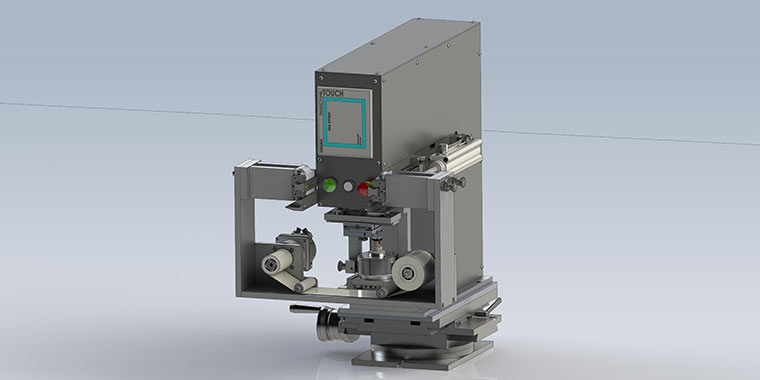
In medical technology, a print image must remain legible throughout the product’s service life. In the EU, markings are subject to Regulation 2017/745 and, depending on the product, must withstand cleaning, disinfection, and sterilisation. In the pharmaceutical industry, process documentation is added, often as part of a qualification in accordance with GAMP 5.
TAMPONCOLOR matches ink, pre-treatment, and process parameters to the material and sterilisation method. Machines can be configured for use in controlled manufacturing environments. The scope of documentation is defined before configuration.
Defence technology
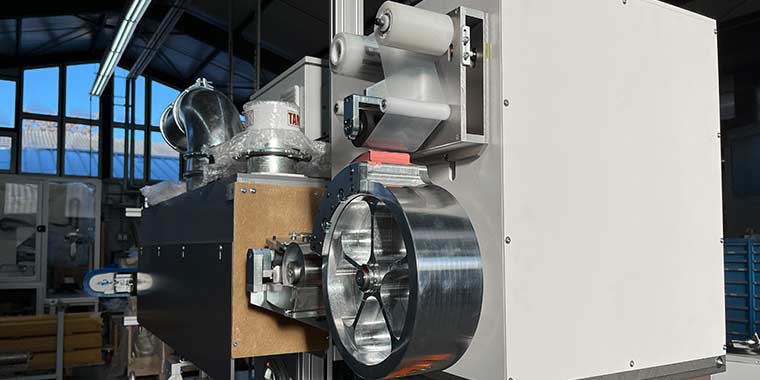
Components in defence technology often remain in service for decades. Markings on controls, scales, and safety notices must withstand temperature cycling, contact with fuels and cleaning agents, abrasion, and UV exposure. The combination of stresses determines the choice of ink system and pre-treatment.
TAMPONCOLOR assesses the printability of the component and configures the process for the required durability. Printed materials include metals, engineering plastics, and coated surfaces. Projects in this field are presented without customer names or component designations.
Tool industry
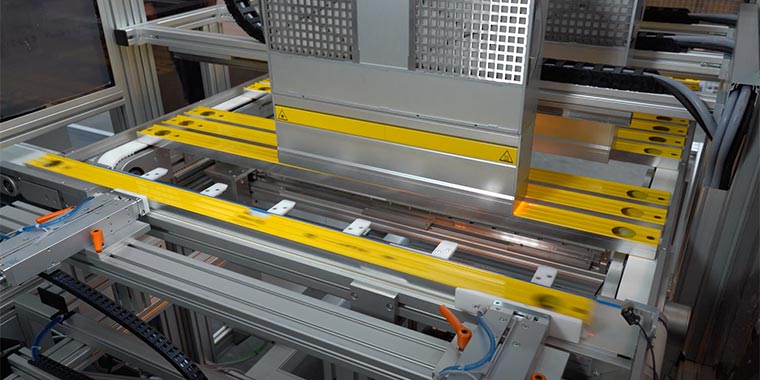
Scales, product information, logos, and functional markings must remain permanently legible directly on tools and measuring instruments. The printing process and component handling must adapt to varying shapes and dimensions.
Applications implemented by TAMPONCOLOR include automated printing solutions for spirit levels and wood saw blades. Depending on the task, standard machines or customer-specific system solutions may be appropriate.
Your sector is not listed?
The technical suitability of a pad printing solution does not depend on the sector designation alone. What matters is the component, its material, the accessible printing surface, the desired motif, and the planned production process.
Send us a photo, a drawing, or initial details about your application. After prior consultation, you can also send in an original component for a feasibility assessment.
What determines the right pad printing solution
Sector knowledge helps identify typical requirements early on. For technical configuration, however, several factors must be assessed together.
Component geometry and print position
Shape, dimensions, and accessibility determine how the component is held and how the printing pad can be guided to the printing surface.
Material and surface
Plastic, metal, glass, ceramic, or coating place different demands on ink, pre-treatment, and adhesion. The specific material combination must therefore be assessed.
Function of the print image
A technical marking places different demands than a scale, a safety notice, or a decorative multi-colour print.
Stress in later use
Chemical, mechanical, or environmental influences can affect the choice of ink and process. The required durability must be clearly described before configuration.
Quantity and degree of automation
Component volume, variant diversity, and production workflow help determine whether a single machine, a semi-automated solution, or a complete pad printing system is appropriate.
Integration into production
Depending on the application, feeding, positioning, pre-treatment, printing, drying, and removal can be combined into a continuous system process. TAMPONCOLOR offers both pad printing machines and integrated printing systems.
From sector requirement to the right printing solution
1
Classify the application
First, the sector, component, print motif, and later use of the printed product are examined.
2
Assess feasibility
Material, surface, geometry, and required properties of the print image form the basis for the initial technical evaluation.
3
Define the process
Based on the application, the ink, cliché, pad, pre-treatment, and any further required process steps are determined.
4
Select the machine concept
Finally, it is determined whether a single pad printing machine or a customer-specific printing system fits the production workflow.
Frequently asked questions about pad printing solutions for different sectors
TAMPONCOLOR develops machines and printing systems for sectors including automotive, medical technology and pharmaceuticals, cosmetics, plastics, the tool industry, and defence technology. Further industrial applications are also possible where the component and printing task are suitable for pad printing.
Yes. What matters is the specific printing task rather than the sector designation. Material, component geometry, print image, quantity, and later stress allow an initial assessment. Send us a photo or drawing of the component and we will tell you whether pad printing is an option.
Helpful details include photos or drawings of the component, the material designation, the desired print motif, the planned quantity, and information on the requirements for the finished print. Any missing details can be worked out together in the initial conversation.
Photos and technical details are often sufficient for an initial assessment. A reliable feasibility assessment may require an original component. Shipment should be arranged in advance by phone or email.
TAMPONCOLOR develops both stand-alone machines and printing systems for automated production workflows. Whether and how integration is possible depends on the existing line, component handling, and the required process steps.
This can only be answered after assessing the component and process requirements. The products overview page explains the differences between pad printing machines, pad printing systems, and rotary printing machines.
Would you like to print a component industrially?
Call us or send us the key details of your application by email. Together we will clarify whether pad printing is suitable and which next step makes sense for your project.
After prior consultation, you can send the component to be printed to TAMPONCOLOR for a feasibility assessment.
Phone: +49 (0) 6102 7954-0 · Email: