Pad printing
Pad printing

The beginnings of pad printing

…are unclear. Indeed, Johannes Gutenberg used a leather-covered ball filled with fabric and horsehair, a ‘tampon’ in French, to spread the printer’s ink over the letters, but this was forgotten over the course of development thanks to the introduction of the print roller. Swiss watchmakers recalled the early use of this tool in 1900. Demand for pocket watches rose rapidly around the turn of the century and watch manufacturers struggled to meet demand. Prior to this, the watch face of every individual watch was produced by hand according to the craftsman’s design. This process required a lot of time and meant that watches were only affordable to a certain class of consumer.

The Declacier method and the first pad printing machines

Watchmakers were on the hunt for a method which would speed up the manufacture of watch faces. The main problem they encountered in this related to the curved shape of the watch face, which made it impossible to use traditional printing methods.
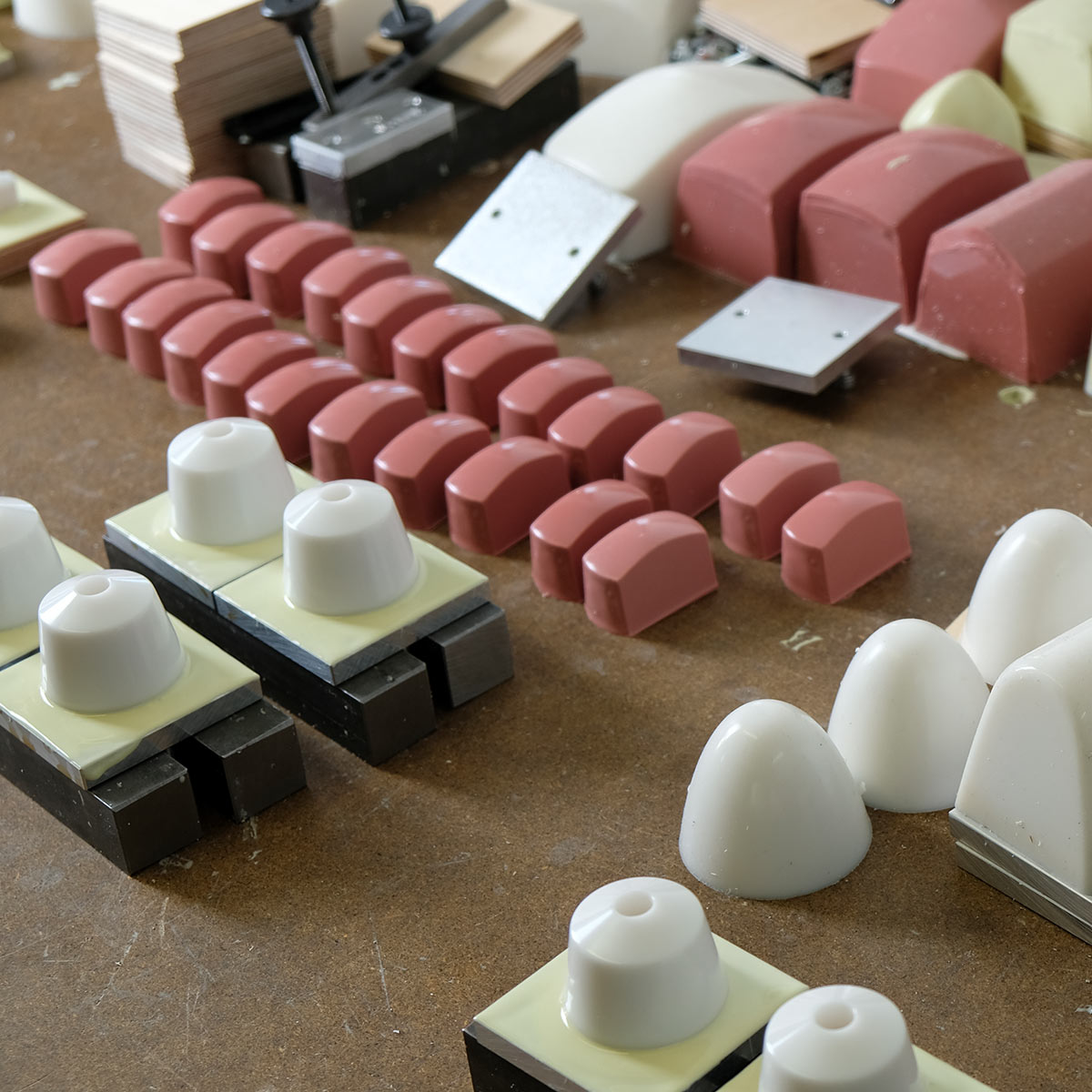
Verschiedene Drucktampons

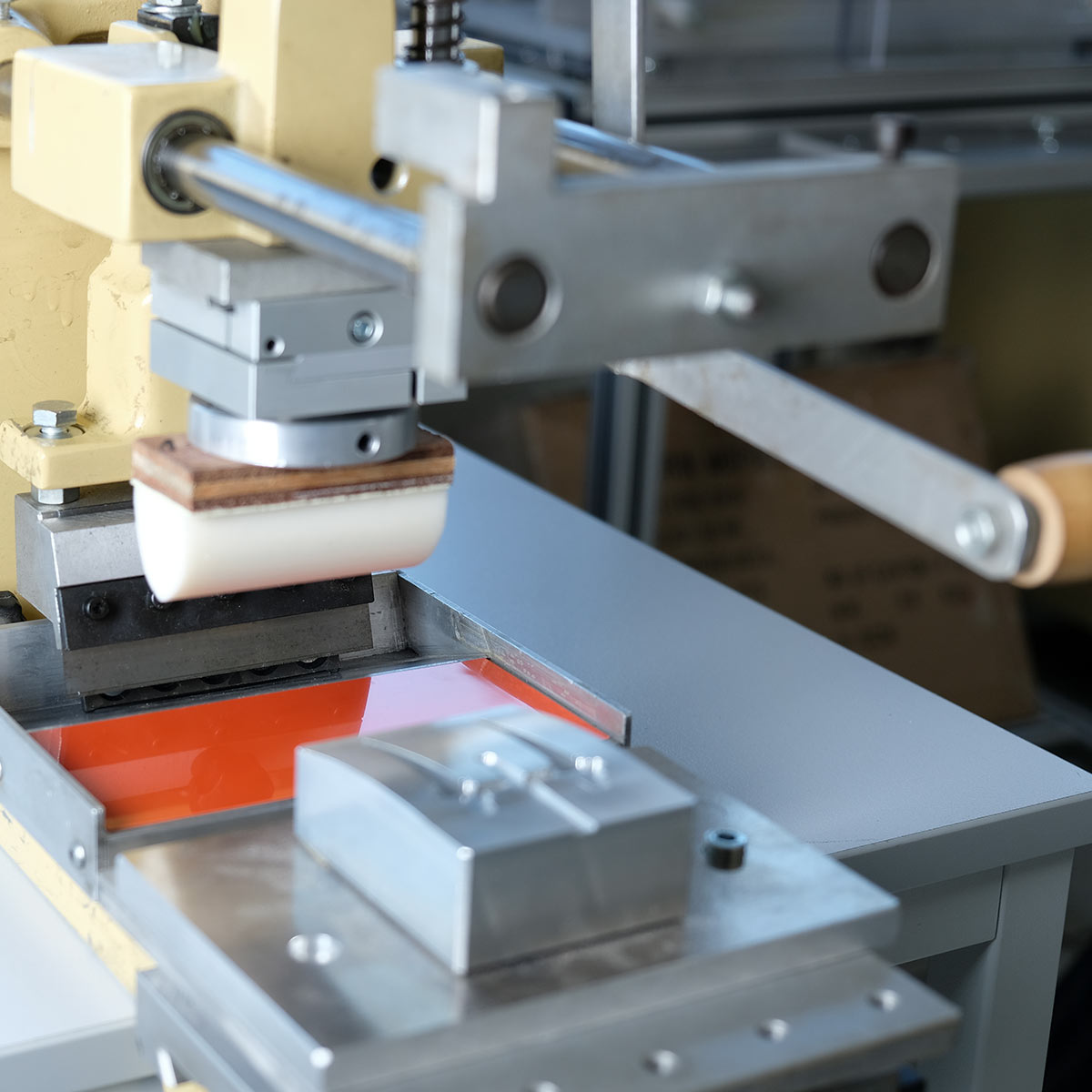
The first pad printing machine functioned according to the same principle as that of a stamping machine: a gelatine pad which could fit comfortably on different curved surfaces thanks to its stamp print, absorbed the ink from the indentations of an inked, engraved printing plate.

The next step was to transfer the motif onto the watch face. The Declacier method marked the beginning of pad printing’s story of success, which today is of significance beyond the watch-making industry.

Tampondruck per Hand

Silicon pads and automation

A decisive step in the development of pad printing machines came in 1968. At that time, efforts were made to find solutions to improve the relatively short lifespan of the pads, thereby reducing the frequent need for replacements and the associated machine downtime. It was discovered that silicone offers significantly better material properties for pad production while maintaining the same printing characteristics. It is durable, adapts flexibly to any shape, and, thanks to the silicone oil it contains, transfers nearly 100 percent of the ink onto the printing object. The printing process was also further optimized and electrified. As a result, the first printing machines tailored to different requirements were developed.

One printing technique – multiple uses

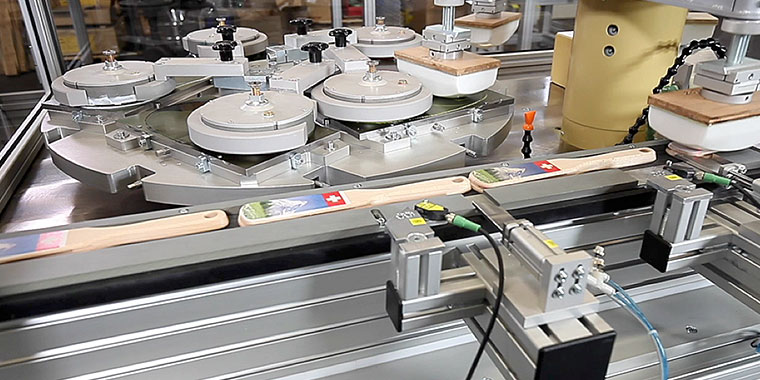
Pad printing machines have long been indispensable in many industries. They are used in any situation where objects with complex shapes, made from a wide range of materials, need to be printed or marked. Its uses range from printing computer keys to advertising materials, model railways and car parts. A range of techniques for pad printing are now available and these fall into three categories: standard pad printing, rotary pad printing and all-round pad printing. In contrast to the standard method with open or closed ink systems, in rotary pad printing the ink in applied using cylindrical pads. This has the advantage of ensuring the printing process is free-run, making it considerably faster. This makes it possible to achieve higher flow rates. Depending on the specification, pad printing technology can be used to meet almost all requirements when it comes to printing and labelling three-dimensional objects.