 Deutsch
 English

Pad printing and marking for defence technology
Markings on technical components must sit at precisely defined positions and fit reliably into the production sequence. TAMPONCOLOR develops customised pad printing machines for demanding marking tasks on metal, engineering plastics and coated surfaces.
The focus is on positioning accuracy, reproducible print quality and an economical production process.
- Founded in 1977
- ISO 9001:2015 certified
- Based in Neu-Isenburg
What matters in demanding marking tasks
Technical markings, notices and symbols must suit the component geometry, the print position and the later conditions of use. Particularly with round components or components that are difficult to handle, controlled alignment and consistent print results are essential. TAMPONCOLOR matches the workpiece holder, printing sequence and ink system to the application.
Requirements for abrasion, chemical or temperature resistance are clarified in the project. The respective adhesion and durability tests are carried out by the customer. Blanket test or service-life commitments cannot be derived from this.
Marking on metal, engineering plastics and coated surfaces
Controlled alignment of round and difficult-to-handle components
Workpiece holder, printing sequence and ink system matched to the application
Durability requirements are clarified in the project
Case study: precise multiple marking on cylindrical metal components
For an anonymised industrial project, TAMPONCOLOR developed an automated printing solution for several markings on cylindrical metal components. The particular challenge was to place the print images precisely both along the length of the component and in their angular position on the circumference.
The system aligns the components using vision sensors and inspects the print image optically. This allows different symbols and several colours to be applied in a single clamping. The system concept described currently allows up to six prints without the workpiece having to be set up again manually between the individual prints.
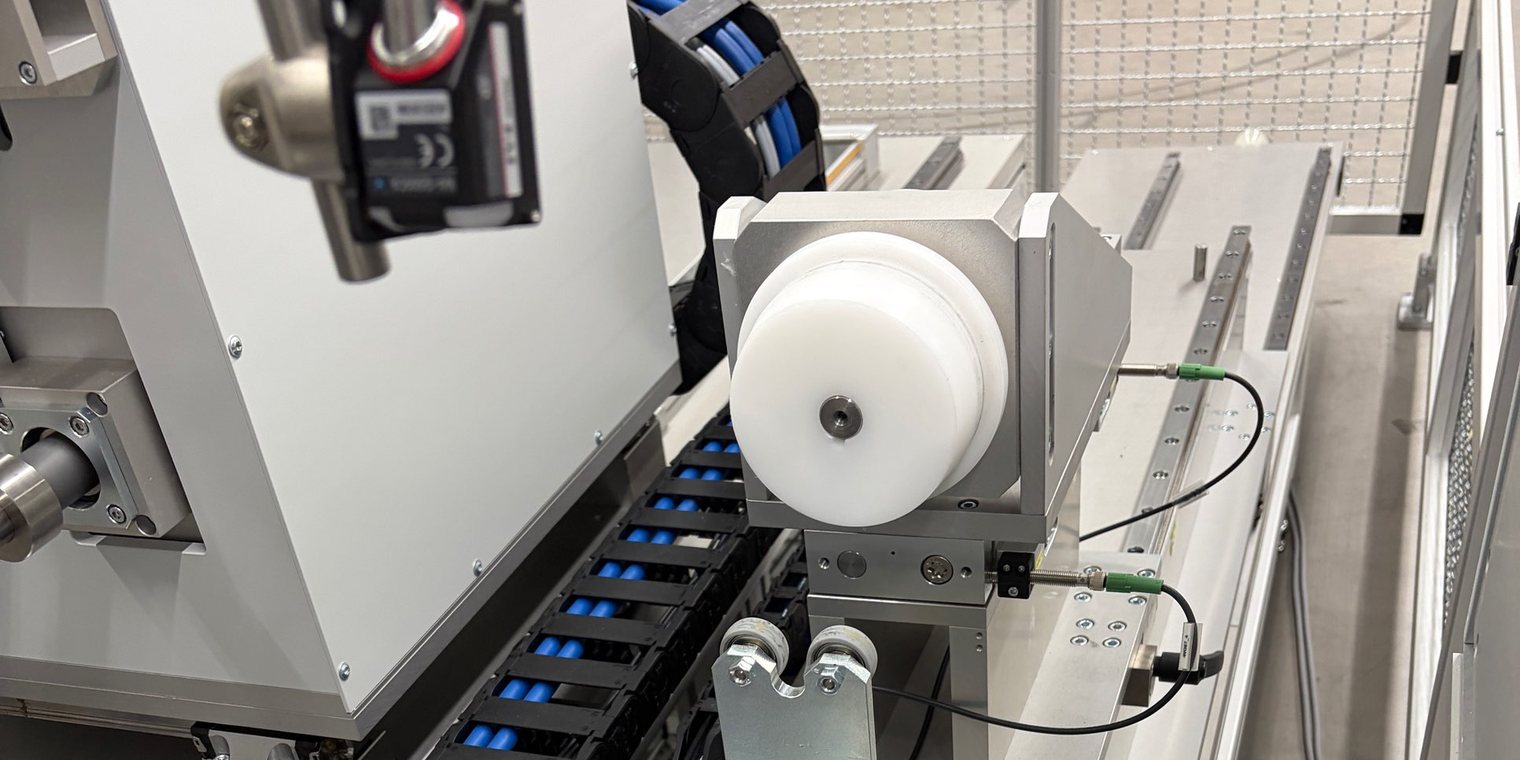
The combination of vision-sensor-based alignment and print image inspection supports repeatable placement of the markings. The economic advantage lies in combining several printing steps and in the lower operating effort, because only one system is needed.
Up to six prints
Several symbols and colours in a single clamping, without manual re-setup.
Alignment by vision sensor
The components are aligned lengthwise and in their angular position on the circumference.
Optical print image inspection
The system inspects the print image optically after printing.
Case study: large-format marking of heavy transport containers
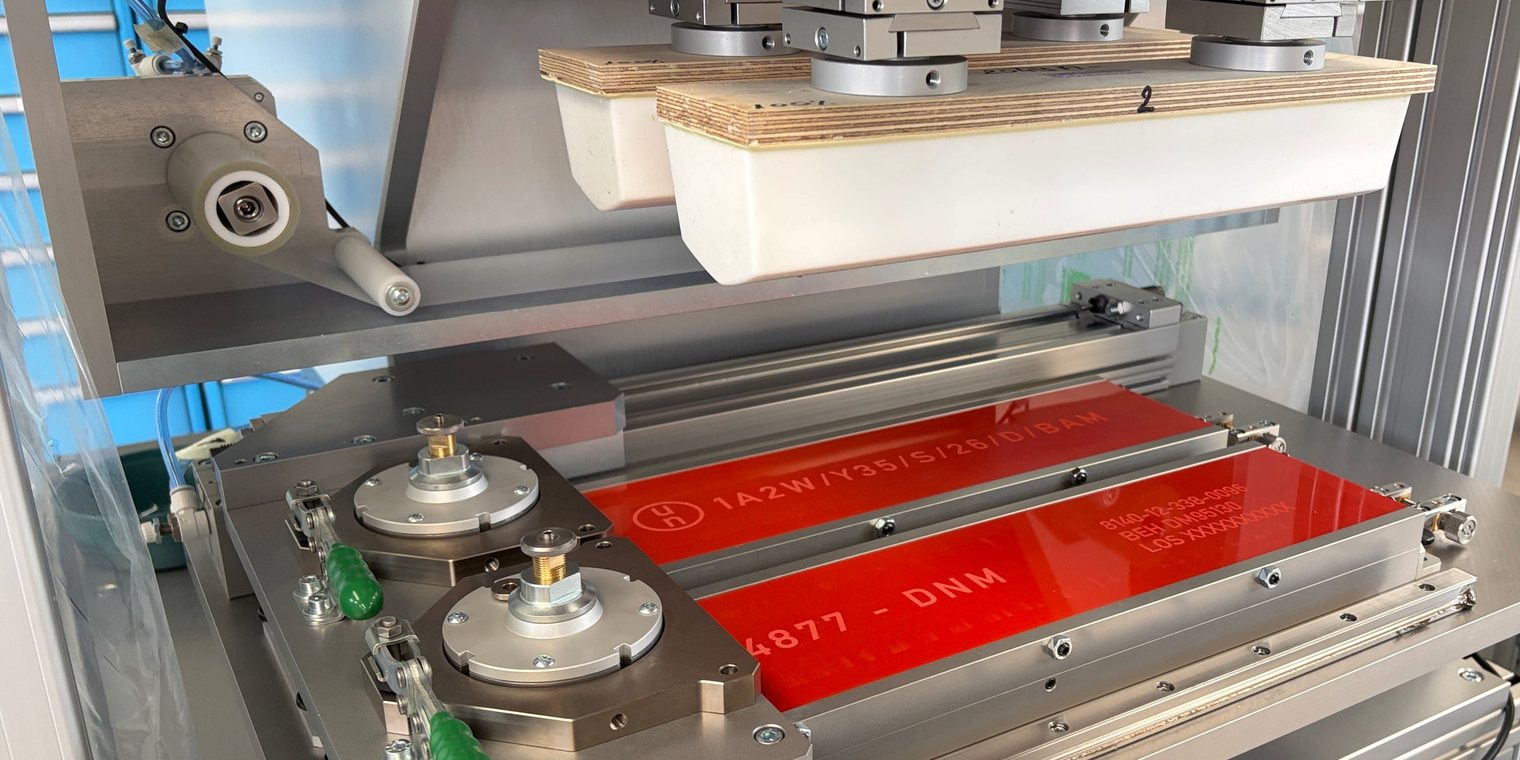
A further application concerns large-format prints on heavy transport containers. Several items of information have to be marked at different positions on the container. The machine applies up to two print images per clamping. The print image measures around 350 × 50 mm per position.
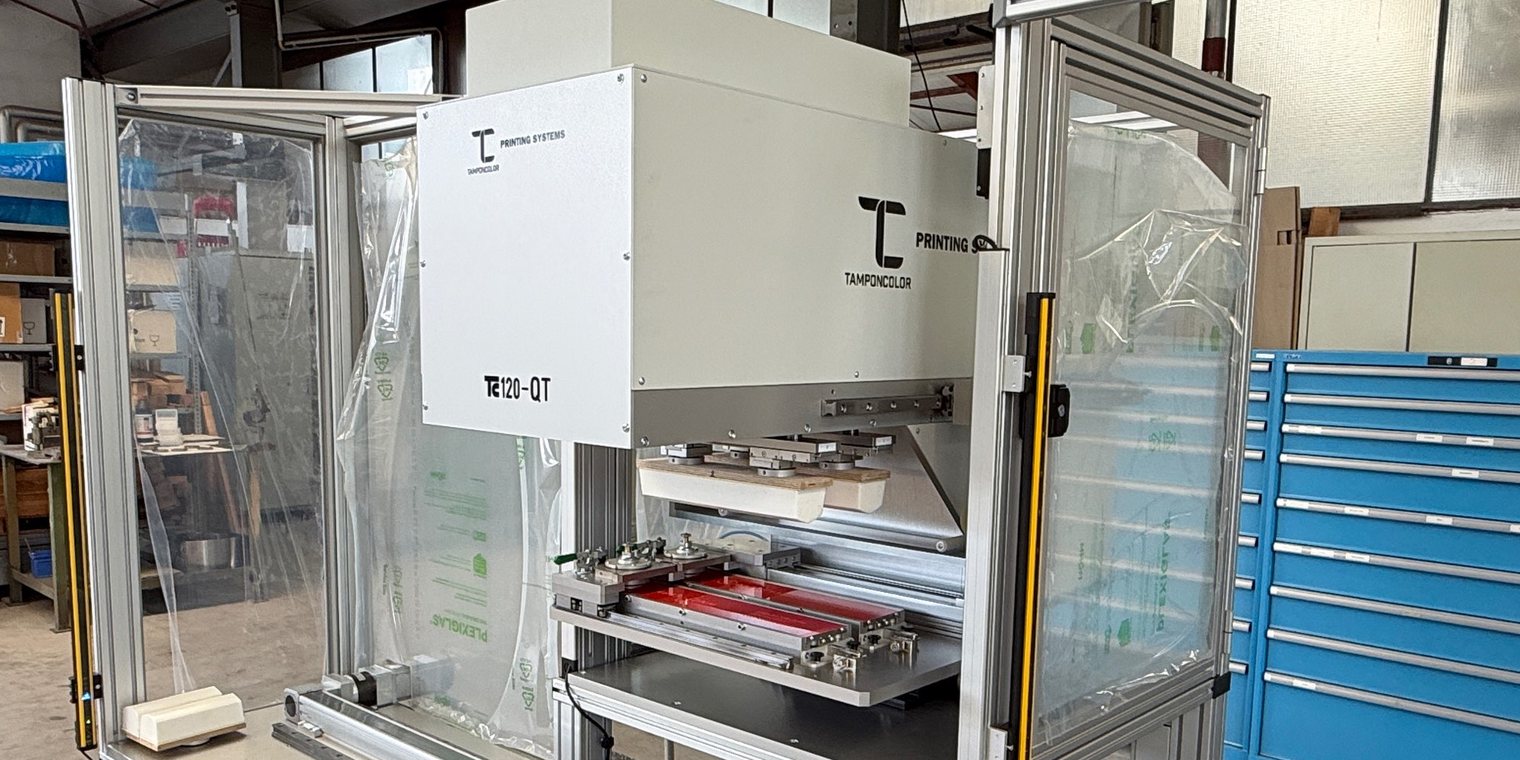
The technical challenges include securely holding large, heavy workpieces and placing the large-area print images repeatably. A TAMPONCOLOR TC 120-QT with two printing pads is used.
Print image approx. 350 × 50 mm
Large-area prints at different positions on the container.
Two print images per clamping
The machine applies up to two print images in a single clamping.
Holding heavy workpieces
Large, heavy containers are held securely and printed repeatably.
Customised machines instead of rigid standard sequences
Whether small symbols, multiple markings or larger print motifs: TAMPONCOLOR develops the machine solution to suit the component size, the number of print positions and the desired production sequence. Workpiece holder, alignment, control system and print image inspection are matched to one another for this purpose. Depending on the application, the pad printing systems can also be integrated into existing production processes.
Frequently asked questions about pad printing in defence technology
Yes. In one completed application, up to six prints were applied to a component within the same clamping. The number achievable depends on the print motif and the system concept.
In the project described, vision sensors handle component alignment and optical print image inspection. For other applications, the appropriate positioning solution is determined individually.
TAMPONCOLOR has implemented a solution for large transport containers in which print images of around 350 × 50 mm are applied at different positions.
The ink system and printing process are adapted to the stresses required. Adhesion and durability tests are carried out in accordance with the requirements of the customer concerned.
Any questions about printing pads, clichés, inks or pre-treatment? The pad printing glossary explains the most important technical terms.
Discuss technical tasks in confidence
Are you planning a marking on a component with a complex shape, or would you like to combine several printing steps? Tell us about the material, print motif, print position and quantity.
We will work with you to clarify the suitable printing process and the machine configuration required. We treat project details confidentially.
Phone: +49 (0) 6102 7954-0 · Email: